
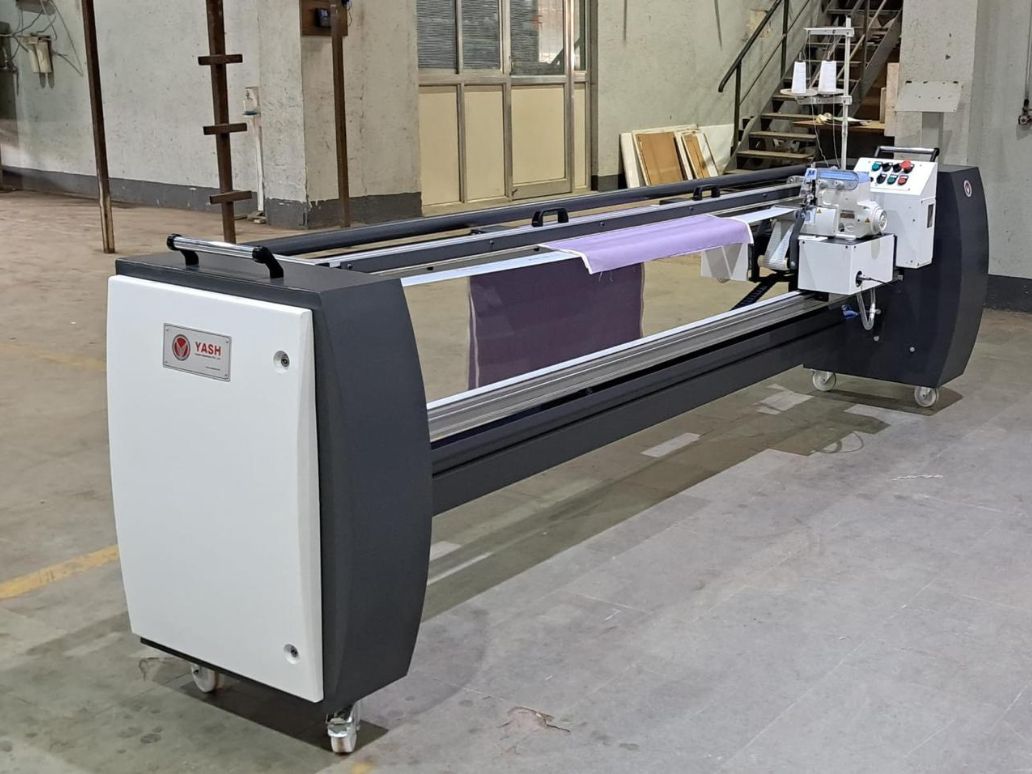
If you export garments, your buyer almost certainly specifies the 4-point system in their quality manual. It is the global standard for incoming fabric inspection, developed under ASTM D5430-93 by the American Apparel Manufacturers Association and accepted by virtually every major international brand buying from South Asia.
The concept is simple. Every defect you find during inspection gets assigned a penalty point score based on how big it is. Small defects get 1 or 2 points. Large ones get 3 or 4. The total points for a roll are then expressed per 100 square yards of fabric. If that number exceeds your buyer’s threshold, the roll fails.
|
Defect Size |
In Millimetres |
Points Assigned |
|
Up to 3 inches |
Up to 75 mm |
1 point |
|
3.1 to 6 inches |
75 to 150 mm |
2 points |
|
6.1 to 9 inches |
150 to 230 mm |
3 points |
|
Over 9 inches |
Over 230 mm |
4 points |
|
Hole up to 1 inch |
Up to 25 mm |
2 points |
|
Hole over 1 inch |
Over 25 mm |
4 points |
The typical acceptance threshold is 40 points per 100 square yards, though buyers set their own limits. Denim and cotton twill mills are usually expected to stay under 28 points, and synthetic fabrics under 20. Any roll that exceeds the buyer’s number either gets rejected outright or classified as second quality and sold at a discount.
There is one rule that catches a lot of mills off guard. Any running defect that continues for more than three consecutive linear yards automatically rejects the entire roll, regardless of the total point count. A shade bar, a reed mark, a broken selvedge. If it runs and runs, the roll is gone. This is exactly the kind of defect that is easy to miss in manual checking but almost impossible to miss on a properly run inspection machine.
Bangladesh’s garment industry crossed 39 billion dollars in exports in 2026 and is still growing. The factories supplying H&M, Zara, Primark, Walmart and the rest are not just competing on price anymore. Buyers are selecting vendors based on quality systems, compliance documentation, and audit scores. RSC certification, BSCI, SEDEX, OEKO-TEX. The compliance overhead stacks up. Underneath all of it is a basic expectation that you can prove your incoming fabric was inspected properly.
Indian mills face the same pressure. Whether you are in Tirupur running knit exports, in Surat doing synthetics, or anywhere in Maharashtra producing for the domestic or export market, the direction is the same. Buyers want records, defect reports, and documented evidence that someone actually checked the fabric before it went into production.
Beyond compliance, the commercial logic is straightforward. A mid-sized factory consuming 10,000 metres of fabric a month with even a 3% buyer rejection rate is losing around 300 metres of finished garment value every single month. At typical fabric costs, that is a significant recurring loss. A fabric inspection machine pays that back in savings within the first year or two of use.
We speak with mill owners regularly who say they do not have time to inspect incoming fabric. What they actually do not have time for is the chaos that comes when uninspected fabric creates problems halfway through production. The rush orders, the rework, the late deliveries, the buyer calls. Proper inspection at the start is what prevents all of that.
Contact: sales@yashtex.com | +91 9702393618 | www.yashtex.com