
Somewhere in a garment factory right now, a batch of fabric is moving to the cutting table that nobody has properly inspected. Not because anyone decided to skip it. The process was simply never set up. The fabric gets cut. It gets stitched. Some of it reaches the buyer. And then the phone call comes.
We have seen this happen more times than we can count. A shipment gets rejected. The buyer sends back photos. Broken picks running the length of the roll. A shade bar going edge to edge. Pinholes scattered across three metres. All of it was right there in the fabric when it arrived. Visible to anyone who had looked properly. Nobody had the right setup to look.
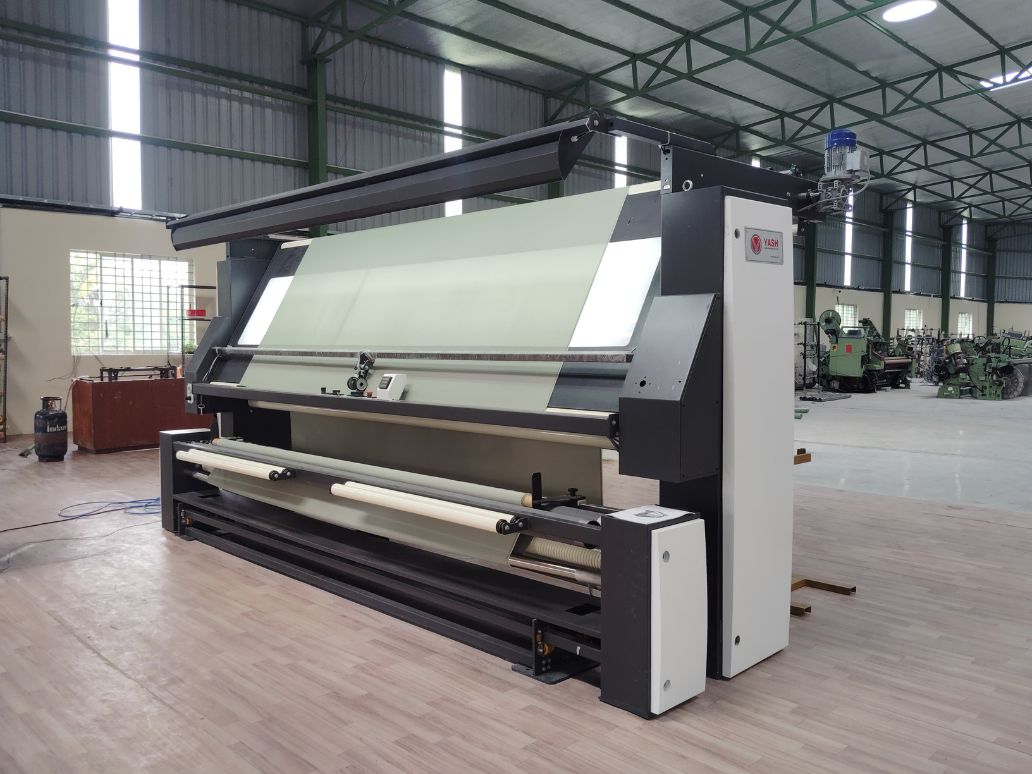
A fabric inspection machine is not complicated technology. It does not need to be. What it does is create the conditions that make proper fabric checking actually possible. The right angle, the right light, the right speed, a counter that tells you exactly how much fabric went through. This guide is for mill owners, production managers, and quality heads who want to understand what these machines do, which type they actually need, and why getting this step right has a bigger impact on the bottom line than almost anything else.
Imagine trying to inspect 120 metres of fabric by holding it up to the window. The light changes depending on the time of day. The fabric is at whatever angle your arms can hold it. You’re moving as fast as your hands allow. You catch some things. You miss plenty.
A fabric inspection machine changes all of that. The fabric passes over a backlit table at a controlled speed, no faster than 15 yards per minute as the ASTM standard requires. It sits at a 45 to 60 degree angle to the inspector under consistent fluorescent or LED light. Every metre is seen the same way. Every defect gets flagged and marked. The roll length gets logged automatically by a digital counter. The inspector does not have to guess how much fabric went through. The machine tells them.
That consistency is the whole point. Manual checking is inconsistent by nature. Different inspectors, different lighting, different levels of tiredness at different times of the day. A fabric inspection machine removes most of that variability. What you are left with is a process you can actually rely on, and document, which buyers increasingly require.
This is where a lot of mills go wrong. They buy the same machine a neighbour bought, or they go with whatever is cheapest, without thinking about what fabric they’re running. The type of fabric you process matters more than almost any other factor in deciding which inspection machine to buy.
Cotton, denim, twill, canvas, poplin, polyester blends. These fabrics are dimensionally stable. They do not mind tension. A standard woven fabric inspection machine applies controlled tension as the fabric moves through the frame, which actually helps it lie flat and makes defects easier to spot. Most of these machines run at adjustable speeds between 0 and 60 metres per minute, with digital length counters and backlit inspection tables. If your mill is primarily processing woven fabrics, which covers most cotton and denim mills across Gujarat, Maharashtra, Tamil Nadu, and the denim clusters in Bangladesh, this is the machine you need.
Knit is a completely different story. Jersey, interlock, rib, fleece, spandex, lycra blends. All of these fabrics are elastic by nature. Run them through a machine that applies even modest tension and the fabric stretches during inspection. It measures longer than it actually is at rest. When it gets cut, it relaxes and comes out narrower than expected. Your marker efficiency calculations go out the window. You end up with garments that are off-spec in width.
A tensionless knitted fabric inspection machine is built specifically for this. The fabric drive system moves the fabric through at zero tension. It does not pull it forward and it does not let it bunch. For any mill in Tirupur, Ludhiana, Dhaka, or Chittagong that is primarily running knitwear, this is not a nice-to-have. It is the only machine that gives you accurate results.
If you are handling a mix of wovens and knits, speak to your machine supplier before buying. Some tensionless machines handle lighter wovens reasonably well, but heavy constructions like canvas or denim really need a proper tension-drive setup. The answer might be two machines, or a configurable machine designed to switch between modes. At Yash Textile Machines we work through this with each customer individually, because getting the wrong machine is an expensive mistake that takes time to undo.
High-end mills producing for buyers who require digital defect reports are increasingly moving toward automated optical inspection. These machines mount high-resolution cameras above and below the fabric, run computer vision algorithms in real time, and automatically detect, classify, and log defects with their co-ordinates on the roll. The inspector still oversees the process, but the machine does the detection. If your buyer is asking for defect map reports or if you’re running volumes where manual inspection is a bottleneck, this is where the technology is heading.
Contact: sales@yashtex.com | +91 9702393618 | www.yashtex.com